Are Blue Crabs Safe to Eat From the Hudson River?
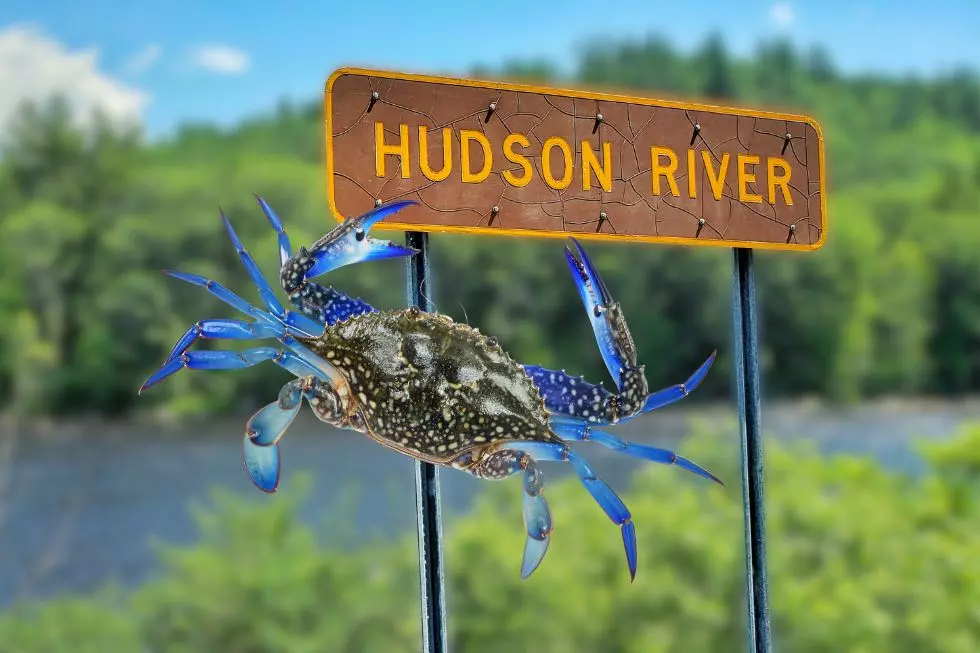
Blue crabs are in peak season in the Hudson River, and you don't even need a fishing license to catch them. But are they really safe to eat?
The New York State Department of Health has some pretty specific warnings about eating seafood caught in the Hudson River, including several species they say you shouldn't eat at all.

Seven Things You Shouldn't Eat From the Hudson River
The New York State Department of Health lists some pretty serious advice for seafood caught in the Hudson River through Ulster, Dutchess, Orange, Putnam, Rockland and Westchester Counties.
According to the state's latest advisory, there are seven catches from this section of the Hudson that are listed as "DON'T EAT" for the general population.
They are white catfish, walleye, smallmouth bass, gizzard shad, channel catfish, carp and the tomalley or cooking liquid from crabs and lobsters.
The primary concern is PCBs, although the state also lists dioxin and cadmium as contaminants in crab and lobster tomalley and cooking liquid.
Luckily, blue crab meat isn't on the "DON'T EAT" list, but that doesn't mean they're entirely safe.
Advisory for Eating Hudson River Blue Crabs
The Department of Health says people in the general population can eat up to four meals of Hudson River blue crab meat per month, with six crabs considered one meal.
There is one very important catch.
The state says you should never eat the soft greenish material inside the body of the crab that's sometimes called mustard, tomalley, liver or hepatopancreas. That's where contaminants including PCBs and cadmium can become dangerously concentrated.
You should also throw away the water used to cook Hudson River crabs instead of using it for soups, sauces or anything else. The Department of Health says contaminants can transfer into the cooking liquid.

Some Hudson Valley Residents Shouldn't Eat Blue Crabs at All
The advice is much more restrictive for what the state calls the "Sensitive Population."
That includes people who may become pregnant and are under 50, as well as children under 15. The Department of Health says those people should not eat blue crab meat from the Hudson River between the Rip Van Winkle Bridge and the Battery.
In fact, the state's advice for this group is much stricter for nearly everything caught in the river. For example, while the general population can eat striped bass and yellow perch up to four times per month, the recommended limits are lower for the Sensitive Population. Many other species shouldn't be eaten by this group at all.
You Can Catch Quite a Few Hudson River Blue Crabs
New York allows recreational crabbers to take up to 50 blue crabs per day. Hard-shell blue crabs must measure at least four-and-a-half inches across the carapace. Soft-shell crabs must be at least three-and-a-half inches and peelers must measure at least three inches. Egg-bearing females cannot be taken.
The good news is that no license is required to collect blue crabs, so anyone can take part in the bountiful harvest from mid-August through early fall.
Just make sure to stick to the meat, toss out the mustard and cooking water and don't overdo it if you want to stay safe.
10 Largest Fish Ever Caught in NY State
Gallery Credit: Will Phillips
More From WPDH-WPDA